

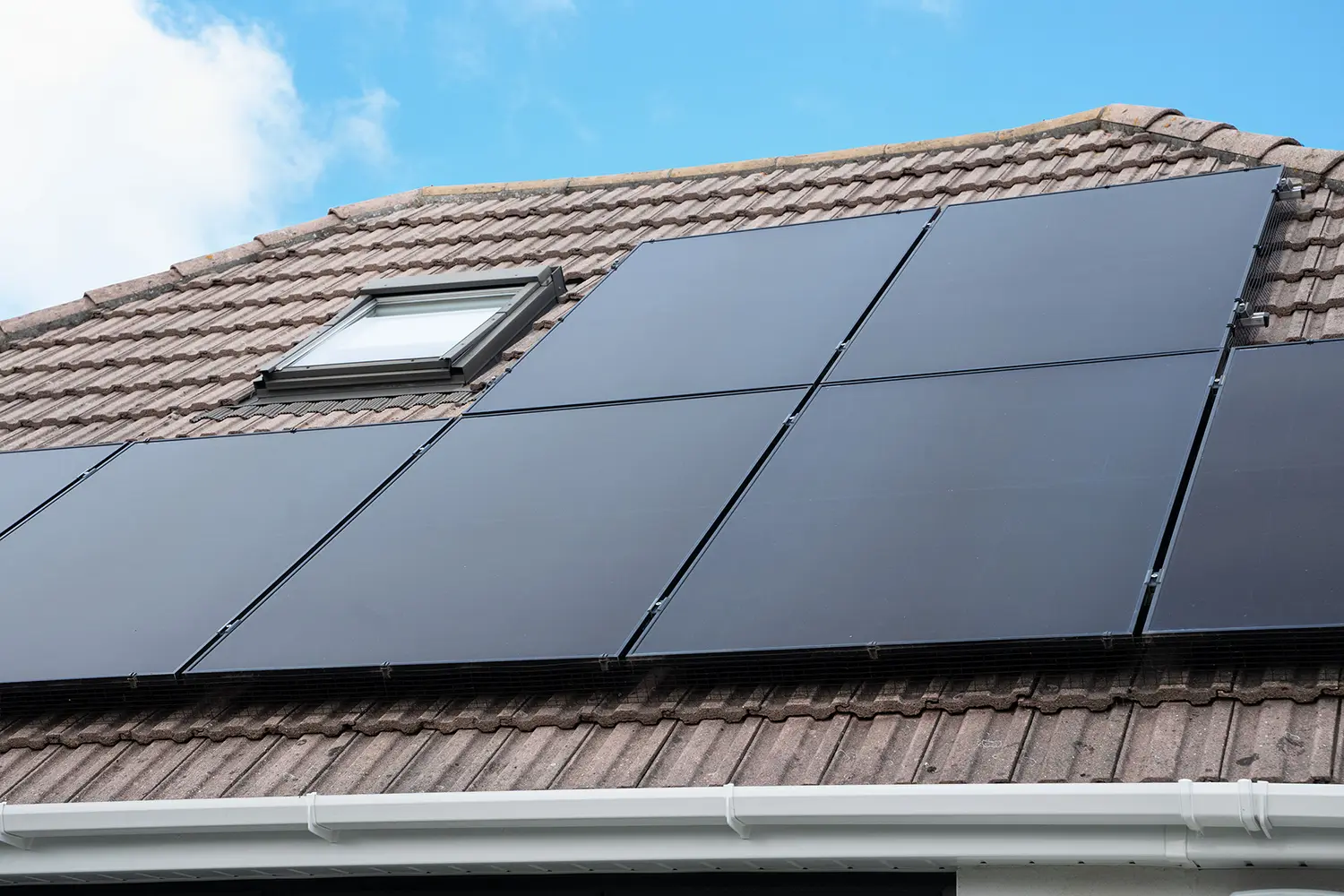
You may have seen in the news that energy prices are predicted to go up due to the ongoing conflict in the Middle East, with the reduction in April’s energy price cap forecasted to increase in July.
As the global energy market continues to navigate supply disruptions, it can be uncertain how your energy bills are going to be affected. That’s why more homeowners are now turning to solar panel and battery systems as a practical, long-term solution to reduce reliance on the national grid, lower bills, and protect themselves from sudden price spikes in the future.
So why is now the best time to install solar and battery storage?
The latest energy price cap
From 1 April to 30 June 2026, Ofgem set the energy price cap at £1,641 for a typical dual‑fuel household paying by Direct Debit, down £117 from the previous quarter. While energy bills are easing for now, the UK remains exposed to global energy volatility, and events in the Middle East are a reminder of just how quickly that can change.
The energy price cap resets every three months, with official forecasts for July-September to be released by Ofgem on 27 May 2026. This means households only have a short window of lower energy prices before pressures on the energy market push costs up again.
Currently, Cornwall Insight is forecasting the July energy price cap at £1,836 based on market prices from 16 April 2026, a jump of just under £200 from April’s cap. So why does a war involving Iran matter to UK households?
How global conflict pushes UK energy bills higher?
Key global shipping routes, like the Strait of Hormuz, are critical to moving oil and gas around the world, and disruption to these routes can quickly create knock‑on effects across international energy markets. When supply becomes harder or riskier to transport, wholesale prices react fast.
Energy is traded globally, so any tightening in gas or oil supply leads countries across Europe competing harder for the same energy. The result is higher wholesale prices, and those costs inevitably feed through to UK energy bills.
Economic think tank, Bruegel, mentioned that shipping through the strait had slowed to a near standstill after the first strikes on 28 February 2026. From this point, energy markets had responded fast. Reports released in early March said Britain’s benchmark gas price had already jumped by around 54%, with wholesale gas prices rising by more than 60% over the previous two weeks.
This matters because gas still generates around 28% of Britain’s power supply. Even as renewable solutions continue to grow, such as solar and battery storage - wholesale energy costs remain a significant part of what households pay, accounting for around 40% of the average bill.
Why energy volatility may continue in the coming months
Even without further damage to energy infrastructure, ongoing conflict can keep energy prices higher for longer. When global uncertainty persists, markets tend to build that risk into pricing - pushing up the cost of gas and electricity well before any physical shortages are felt in the UK.
For households, this usually feeds through further down the line. Suppliers have to pay more to secure energy for the months ahead, and those higher wholesale costs can be passed on through tariffs and future energy price caps.
The risk increases further if conflict causes lasting damage to major energy infrastructure in the Gulf, and this is no longer just a theoretical concern. In March, strikes disrupted parts of Qatar’s gas facilities, knocking out around 17% of the country’s Liquefied Natural Gas (LNG) export capacity and affecting 2 of its 14 LNG production units.
Repairs are expected to take three to five years, potentially removing 12.8 million tonnes of LNG per year from the global market. The impact of this was felt almost immediately, with European gas prices rising by up to 35% in a single day, more than doubling compared with pre‑conflict levels.
How installing a solar panel and battery system can protect you from rising energy prices
This is why installing a solar panel and battery system to your home matters more than ever. In a volatile energy market, the cheapest unit of electricity is often the one you do not need to buy from the grid.
Solar panels let a household generate part of its own electricity during the day. Battery storage allows that electricity to be used later - in the evening, when household demand is higher and grid electricity is often at its most expensive.
The case for battery storage becomes even stronger when energy prices shift as they do now. By storing more of the electricity generated by solar, a home battery can increase self‑consumption from around 30–40% to approximately 70–80% - relying far less on the grid during peak, higher cost periods.
With Utilita Home, solar alone could save you as much as £962 per year, but you could also earn up to a further £444 per year* by exporting excess energy back to the grid – that’s total savings of up to £1,275 each year*, how good is that?
If you want to save even more, Utilita Optimise has you covered. Our AI‑powered tool automatically manages your solar battery by analysing energy usage, prices, grid demand and even the weather – making up to 48 smart adjustments throughout the day to maximise your savings. It’s completely hands‑free, and can help you earn at least an extra £138 a year on top of your solar savings** – that’s smarter energy, bigger savings, and total peace of mind – all rolled into one.
At the current capped electricity rate of 24.67p/kWh, every 1,000 kWh of grid electricity a household avoids using is worth roughly £247 - before any export payments or time‑of‑use savings are added.
Staying ahead of future energy price increases
The lesson from this year so far is not just that energy prices can rise. It’s that they can rise quickly, for reasons far beyond any household’s control.
A war in the Middle East, disruption in Hormuz, or damage to LNG infrastructure can all feed into UK wholesale markets with surprising speed - and from there into the energy price cap and household bills.
In that world, solar panel and battery systems are no longer only about sustainability or long-term savings. For many homes, they are increasingly becoming a practical, long-term solution by:
- Reducing dependence on volatile grid imports.
- Giving households more control over what they pay.
- Helping protect against the next energy bill shock.
Thinking about how to make your home less exposed to energy price shocks? Now is the time to explore your options!
Request a Call-Back to speak to one of our trusted Home Energy Consultants. From there, you can compare system sizes and explore how solar generation and battery can work together to keep your home off the gird and energy independent.
*This figure is based around a large electricity usage home in the UK (using roughly 5700 kWh per year). You can save up to £916 per year by installing a 16-panel system with our 5.32kWh battery storage. You can also earn up to a further £359 per year by exporting excess energy back to the grid at an electricity export rate of 12p per kWh. The calculations follow MCS standard procedure and assume a self-consumption rate of 54% for systems with battery storage and 22% for those without. The current unit rate is based on the energy price set by Ofgem at 26.103/kWh. Actual savings may vary depending on the specific equipment chosen and your precise annual energy consumption. Savings may also vary dependent on your property location and any obstacles which could cause your roof to be in shade, reducing the solar generation as a result.
**The additional savings attributed to Utilita Optimise are based on a model scenario involving a 5.32 kWh battery that fully charges and discharges once per day. Calculations assume usage against a single-rate electricity tariff of 25.73p/kWh. Optimisation savings are derived using a smart import tariff with a night rate of 7.9p/kWh and a day rate of 25.73p/kWh, alongside an export tariff of 15p/kWh. Actual savings may vary depending on individual usage patterns, tariff structures, and system performance.